X
Changing a filter automatically updates the other available filters.
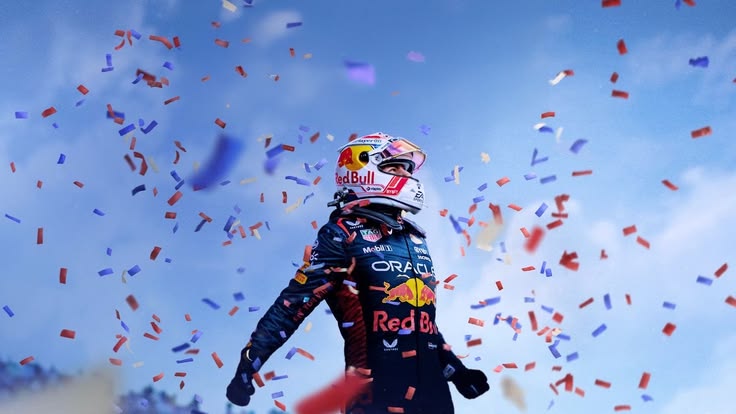
29 Years of Super Max: All the Records of the Dutch Champion
30 September 2026
The world has been filled with rhythms and sounds since the dawn of time. Some sounds are more recognizable than others; there are sounds known only to a few, while others have a truly unique rhythm. The kind of rhythm that, regardless of someone’s personal background or passions, somehow ends up being recognized by everyone. And when we say everyone, we really mean everyone.
Nowadays, there is no one who, upon hearing “DU DU DU DU…”, doesn’t respond with “MAX VERSTAPPEN”.
And so, on the day of his twenty-ninth birthday, we simply couldn’t let the occasion pass without dedicating a little of our time to Super Max and reminding everyone why his rhythm has become so explosive that it has reached every corner of the globe.
Max Emilian Verstappen, or simply “Super Max”, with his four World Championships and having come within just two points of securing a fifth, is now known as one of the most famous names in the world of Formula 1, as well as, without a doubt, one of the greatest drivers in the history of the sport. Today, Max Verstappen, born in 1997, blows out no fewer than twenty-nine candles: twenty-nine years old, a career that began at just four years of age, the youngest-ever Formula 1 debut, and a career that is still unfolding, during which he has broken records—including records he had previously set himself—and established new ones that have firmly cemented his status as the defining talent of this generation. Max Verstappen is, in short, truly the talent of the century. He is no longer simply the hot-headed teenager who climbed into a single-seater at seventeen and often found himself off the track.
Now, he is one of the GREAT ONES.
The origins of the Champion
Not everyone is probably aware that Max’s talent for racing and his desire to win literally run through his veins. Max Verstappen is what can, in every sense, be described as a racing heir. His father, Jos Verstappen, was a Formula 1 driver between 1995 and 2003 and was also Michael Schumacher’s teammate. His mother, Sophie Kumpen, competed for five years in the Formula A, K and Super A classes of the World Karting Championship. Christian Horner himself, former team principal of Red Bull Racing, admitted that he raced against Verstappen’s mother in the 1980s and that Sophie was considerably faster than him. She was so competitive that she gave some of the biggest names in motorsport a run for their money in karting championships, including well-known figures such as Jenson Button, Nick Heidfeld, Jarno Trulli, Giancarlo Fisichella and Marc Gené.
Max Verstappen may therefore undeniably be a racing heir, but let’s also take a step-by-step look at how and why the Dutch driver stood out to such an extent that he came to be regarded as the talent of the century. And while it is true that racing talent runs deep in his DNA, it is equally true that this very talent was already shining through from the earliest age. The first time Verstappen gets behind the wheel of a kart, he is just four years old, yet his abilities are already more than apparent to trained eyes. In 2005, at just eight years old, he takes part in his first Belgian championship, winning all 21 races he enters. Over the following eight years, he manages to win almost everything the world of karting had to offer at the time. In 2010, he is crowned champion in competitions such as the KF3 Euro Series, the KF3 Nations Cup and the KF3 World Series. In 2011, he wins the KF3 Euro Series, while in 2012 he claims the KF2 Master Series title. In 2013, he wins the KZ1 Euro Series and the KZ2 Master Series, while also taking victory in the KF2 and KZ European Championships and the KZ World Championship.
In 2014, at just sixteen years old, Max Verstappen made his debut in a single-seater by competing in the European Formula 3 Championship. What remains truly impressive is how he secured his first victory after just six races, before going on to produce an incredible run of six consecutive wins. He finished the season third in the overall championship standings, with no fewer than ten race victories to his name. Later that same year, he became the newest member of the Red Bull Junior Team, and on October 3, 2014, at 17 years and 3 days old, he made his Formula 1 free practice debut at the Japanese Grand Prix. He would then take part in free practice sessions at two more Grands Prix, showing that, despite his extremely young age, he was more than ready to take on the wheel in the most prestigious championship of them all.
For Red Bull Racing, Max Verstappen was not simply a gamble, but the foundation upon which to build and develop a future champion.
In 2015, a still-underage Max Verstappen was signed by Toro Rosso – Red Bull Racing’s sister team – as a full-time driver alongside Carlos Sainz Jr. He moved directly from Formula 3 to Formula 1 without competing in the Formula 2 championship, setting the record as the youngest driver ever to compete in a Formula 1 World Championship race. He achieved the feat at the opening race of the season in Australia, at just 17 years and 170 days old.
The Crowning at Red Bull Racing
In 2016, during his second year in Formula 1, Super Max was promoted to Red Bull Racing, taking the place of Russian driver Daniil Kvyat, who was instead demoted back to Toro Rosso. As if the impact of his talent had not already been enough of an omen, during his very first weekend behind the wheel of a Red Bull Racing car, he managed to surprise everyone by claiming his first Formula 1 victory at the Spanish Grand Prix. He withstood the pressure from a champion such as Kimi Räikkönen and set yet another record: becoming the youngest driver ever to win a Formula 1 race, at just 18 years and 228 days old.
On that very occasion, Formula 1 legend Niki Lauda admitted after the Spanish Grand Prix that he had “never seen anything like it”, and that Verstappen was undoubtedly the talent of the century. He even tipped his hat in admiration to Jos Verstappen, Max’s father. At the Brazilian Grand Prix, meanwhile, in a rain-soaked race where even the most experienced drivers struggled to keep their cars under control, Verstappen not only managed to keep his car on the track when everyone expected him to lose it, but also produced an incredible sequence of thirteen overtakes to claim a podium finish. It was a performance that perfectly showcased his extraordinary ability to control a single-seater in extremely challenging conditions. During the 2017 season, the Dutch driver claimed two victories, one at the Malaysian Grand Prix and another at the Mexican Grand Prix. In 2018, he won the Mexican Grand Prix once again and secured an impressive eleven podium finishes. 2019 became the year in which he truly established himself as a leading force, claiming nine podiums and three victories, at the Austrian, Brazilian and German Grands Prix respectively, while securing a solid third place in the World Championship standings at the end of the season. In 2020, he went on to win the British Grand Prix and the Abu Dhabi Grand Prix, finishing third in the World Championship for the second consecutive year. He also stood on the podium in every race of the season except the Turkish Grand Prix, once again demonstrating the full extent of his potential.
On Top of the World and the Duel with Hamilton
2021 was finally the year in which Max Verstappen was crowned Formula 1 World Champion. It was a moment of recognition that came after years of hard work, development and growth. While Verstappen had often been viewed and labelled in his early years as inexperienced, overly aggressive or hot-headed behind the wheel, 2021 was the year that showcased the fruits of all the hard work and experience the Dutch driver had accumulated from his Formula 1 debut up to that point. 2021 was also a year of great expectations for the Red Bull Racing team, as it sought to use the new Honda power unit to challenge the Mercedes dominance that had lasted for several years. In particular, the 2021 season is remembered not only for crowning Max Verstappen World Champion for the first time in his career, but above all for the way in which he became champion. The thrilling spectacle created by Verstappen and seven-time World Champion Lewis Hamilton succeeded in reigniting a passion for Formula 1 among fans that had not been seen for several years.
The two drivers battled throughout the entire season, race after race and lap after lap, with their fierce rivalry even resulting in collisions that forced one or both of them to retire from races. The tension that accompanied them throughout the season remained in the air even after the championship had come to an end. That tension also encouraged many people to become interested in the sport itself, as the excitement and curiosity surrounding the prospect of finally witnessing a genuine title fight once again began to ignite Formula 1 after years of absolute dominance by Mercedes and Lewis Hamilton.
Verstappen and Hamilton battled race after race, lap after lap, kilometre after kilometre throughout the entire season, arriving at the final race of the championship, the Abu Dhabi Grand Prix, level on points — something that had not happened in decades. It was a truly extraordinary race, one that had promised fireworks from the very beginning of the weekend and certainly did not disappoint, either on or off the track. Verstappen started from pole position but immediately lost the lead, with Lewis Hamilton taking complete control of the race instead. After a nail-biting race filled with tension and countless twists and turns, the intervention of the Safety Car following a crash involving Williams driver Nicholas Latifi gave Max Verstappen, who was running on fresher tyres, the opportunity to overtake Lewis Hamilton in the final corners of the race. Verstappen won the Grand Prix and was crowned Formula 1 World Champion for the first time in his career, delivering, above all, a breathtaking final lap to fans around the world who had been following the highly anticipated season finale.
The Dominance of Super Max Era
The 2022 season got underway with Red Bull Racing announcing that Verstappen’s contract had been extended through 2028. From a championship perspective, however, the season did not get off to the best possible start for the reigning champion, as the Dutch driver was forced to retire due to a mechanical failure at the very first Grand Prix of the season. After the opening part of the championship suggested that Max Verstappen would once again have to face a fierce battle for the title, this time against Ferrari’s Monegasque driver Charles Leclerc, the second half of the season saw the Dutchman completely outclass his rivals. He secured his second World Championship on October 9 at the Japanese Grand Prix in Suzuka, with four races still remaining in the season. Verstappen finished the 2022 championship with fifteen victories in a single season, surpassing the previous record of thirteen wins in a season, first set by Michael Schumacher in 2004 and later equalled by Sebastian Vettel in 2013.
2023 was the year in which Verstappen established himself beyond any doubt. A perfect combination of a truly cutting-edge car developed by Red Bull Racing and a driver with the pure talent of Super Max allowed the Dutchman, in a single season, to break and set record after record — including some that he himself had previously established — once again raising the question of whether Max Verstappen is truly the undisputed talent of the century and one of the greatest drivers ever. He was crowned Formula 1 World Champion for the third consecutive year, securing the title during Saturday’s Sprint at the Qatar Grand Prix, with six races still remaining on the calendar. In a championship consisting of twenty-two Grands Prix, Max Verstappen won nineteen of them, setting a new record for the most victories in a single season, surpassing the record he himself had established the previous year.
He also set the record for the most podium finishes in a single season, with an extraordinary twenty-one podiums from twenty-two races. Among his most remarkable records were also: the most consecutive victories, with ten Grands Prix won in a row, surpassing Sebastian Vettel’s previous record of nine; the most points scored by a driver in a single championship, with 575; the youngest driver to achieve a Grand Slam in Formula 1 — consisting of pole position, fastest lap, leading every lap and victory; the most laps led in a single season, with 1,003; and becoming World Champion with the most races still remaining, securing the title with six races to go, equalling Michael Schumacher’s record from 2002.
The 2024 season, on the other hand, was a year of challenges, but one in which the true difference between the car and the driver became increasingly evident. While the season began with the same promising signs as the previous year — pole positions and victories — as the months and races went by, reliability issues with the car and the turmoil behind the scenes at Red Bull allowed other teams, such as McLaren, to close the gap and challenge for the title. During the second half of the season, as a fierce championship battle emerged between Verstappen and Lando Norris, the difference between the car and the driver became more apparent than ever. Despite Norris having the advantage thanks to the outstanding performance of his McLaren, Super Max once again demonstrated, at Red Bull, just how much the driver himself can matter.
During the Brazilian Grand Prix in São Paulo, the Dutchman was eliminated in Q2 due to a red flag and was forced to start from seventeenth on the grid. The race, however, took place under torrential rain, making visibility almost impossible. Yet precisely where everyone else was struggling tremendously and lap after lap several drivers were forced to retire, Verstappen produced an extraordinary comeback, overtaking one rival after another as if he were driving on a dry track. He won a truly remarkable race, one of the most challenging of his career up to that point, putting a definitive stamp on his battle with rival Lando Norris, who had started from pole position but eventually crossed the finish line only in sixth. He was crowned World Champion for the fourth consecutive year at the Las Vegas Grand Prix.
The 2025 season once again saw Super Max battling Lando Norris, with a fifth title that ultimately slipped through his fingers by the narrowest of margins. After an intense start to the season that once again saw him locked in a battle with McLaren’s number four, Verstappen found himself watching his title hopes fade as a result of a car that failed to perform the way he needed it to. The second half of the season, however, saw him produce an incredible comeback, one that deserves a place in the history books. Super Max, despite having a car that was clearly inferior to his rival’s, produced a remarkable recovery, clawing back 104 points in just eight races and arriving at the final race of the season with a genuine chance of claiming a fifth World Championship. It was Norris, however, who ultimately secured the title, while Verstappen had to settle for the second step of the podium, finishing just two points behind his rival.
What became clear, however, was just how capable Super Max’s talent is of transforming a difficult situation — or one that appears to be already lost — into a genuine opportunity. Finishing second in the 2025 championship, losing the title by just two points with an inferior car, and producing such an extraordinary comeback are nothing more than yet another testament to a talent rooted in years of hard work, but above all in an immense passion for the simple act of racing. Anyone who has followed Max Verstappen’s career from his earliest days is well aware that, in a sport where the mechanical performance of the cars undoubtedly plays a crucial role, there is also a need for a driver capable of harnessing and sensing the potential that a Formula 1 car can deliver. Alex Albon, Williams driver and Verstappen’s former teammate, highlighted in an interview how the Dutchman possesses a far more developed ability to adapt than his Alex Albon peers — undoubtedly the result of years of hard work that began in childhood, but also of that unique talent for becoming one with the car.
Max Verstappen has broken countless records.
There are only a few left to conquer, but for a driver blessed with pure talent like Super Max, none of them seem impossible.
Edited by Elena Garzilli
Tag Associati
Inserito in
Subscribe to our newsletter and stay always
in pole position with our latest news!
in pole position with our latest news!